
Seeing Beneath the Skin: How Cadaver Dissection Transformed My Therapeutic Yoga Practice
Jen Beal | MAY 20, 2025
cadaver
yoga medicine
dissection
yoga
anatomy
fascia
CADAVER DISSECTION LAB
LABORATORIES OF ANATOMICAL ENLIGHTENMENT
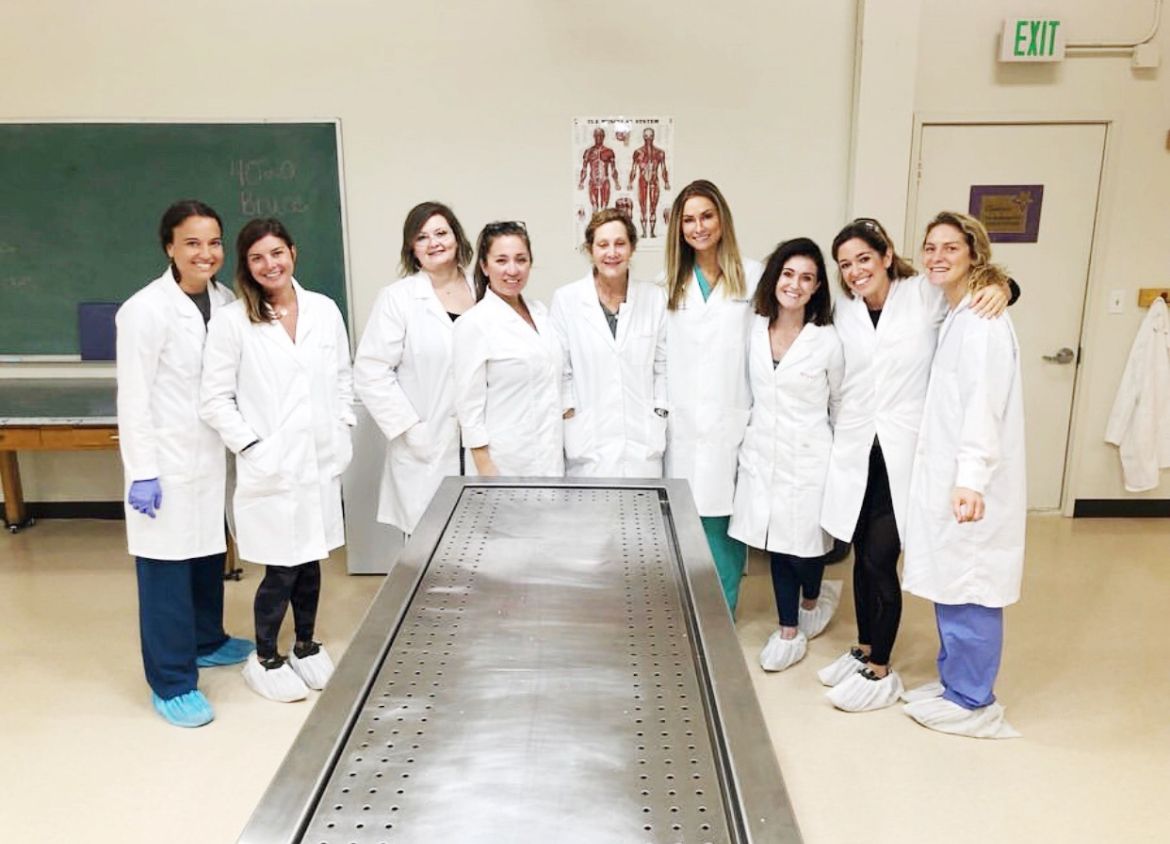
BOULDER, COLORADO, OCTOBER 2019
Introduction
When I signed up for the cadaver dissection lab, I knew it would be powerful - but I didn’t expect how deeply it would shake me. I was scared. The idea of being in a room with deceased bodies, opening them up to see what lies beneath the skin, stirred up fear, reverence and a deep uncertainty in me. But I felt called to understand the body in a way that no textbook or diagram could ever truly offer. I chose to include this experience as one of my case studies, not because it involved a client, but because it transformed the way I see every client and every body I work with now. It brought me closer to the truth of the body – and to the sacred responsibility of therapeutic yoga.
The Experience
The dissection lab was five days long. Every single day, I felt scared. I hesitated before walking through the door, heart pounding, breath shallow. But I went back each day because I was learning something that changed me on a cellular level. The bodies were silent teachers, offering their stories through tissue, posture, scars and structure. It was both overwhelming and beautiful.
I was struck by how much you can learn about a person’s life just by looking at their body from the inside. The tissues told stories: old injuries, surgeries, lifestyle habits and emotional holding patterns. Nothing was hypothetical – it was all real, tangible and human. Although these were anonymous bodies, they were people who had lived very full lives. That was humbling.
Anatomical Insights Gained
One of the most surprising and powerful realizations was how interconnected everything truly is. Textbooks might label structures separately, but in the cadaver lab, there were no clear lines. Fascia weaved everything together. The diaphragm, for example, wasn’t just a dome of muscle – it was a dynamic bridge between breath and spine, emotion and posture.
I was also amazed by the variation. No two bodies were the same. Some muscles were more defined or more atrophied than expected. Some joints had visible wear and tear, others showed signs of trauma or long-held compensations. The fascial layers told stories of strain, injury or habitual movement. Seeing this firsthand shattered the idea of a “perfect alignment” and reinforced the importance of individual anatomy in yoga.
Integration Into Therapeutic Yoga Practice
Since the lab, I have become a more intuitive and respectful teacher. I now see my students’ bodies as layered, complex maps – full of lived experience. I speak differently, cue more mindfully and hold space for the fact that every body is carrying something invisible beneath the skin.
In my therapeutic sessions, I find my self “seeing” with a different lens. For example, when guiding a student through breathwork, I think of the lungs I held in my hands – their texture, weight, fragility. When offering myofascial release or yin poses, I remember the density and depth of fascia and how it encased and connected every structure. These memories have deepened my reverence for stillness and sensation.
Even in the smallest details, like a student shifting in savasana, I have more empathy. I understand, in a tangible way, how bodies compensate, how they protect and how they endure.
Energetic and Spiritual Impact
There was a spiritual dimension to this work that I didn’t anticipate. Being in the presence of death every day and seeing the body not as an object but as a story, changed something in me. I felt grief, awe and a profound sense of gratitude – for the donors, for my own body, for the gift of life itself.
This experience has made me more grounded in my role as a guide and space-holder. I now approach each class and clients with a deeper sense of reverence. Being with death made me more committed to life. Being with a body makes me more respectful of the living ones I work with every day.
Conclusion
The cadaver lab wasn’t just an anatomy class – it was a spiritual and emotional initiation. I now see bodies differently. I no longer look for perfection in posture or ideal alignment. I look for relationship, for expression, for presence. I can see beyond the skin.
This experience reminded me that therapeutic yoga is not about fixing people, but about witnessing them – body, mind and soul. And it taught me that even in death, the body has so much to teach us about life.
Jen Beal | MAY 20, 2025
Share this blog post

 OfferingTree